Risk Management Strategies for Novice Traders
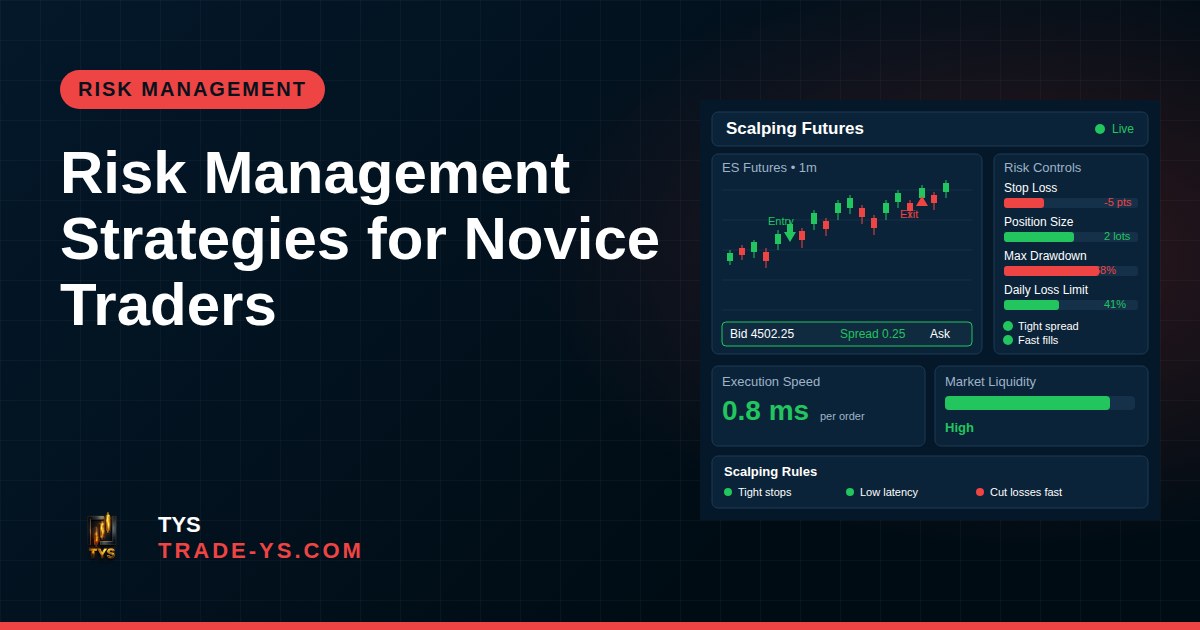
Scalping in Futures Markets
What is Scalping ?

In the bustling world of trading, scalping stands out as a demanding and fast-paced strategy. Let’s delve into the intricate realm of scalping applied to futures markets, exploring sophisticated strategies, advanced risk management techniques, and crucial considerations for achieving success in the quest for short-term profits.
The Fundamentals of Scalping in Futures Markets:
Scalping, the approach of profiting from minute price movements, demands mastery of execution speed, technical skills, and market insight. Futures markets are especially conducive to scalping for two pivotal reasons:
- Execution Speed: In the scalping world, every millisecond counts. Futures markets offer cutting-edge technological infrastructure, enabling instantaneous executions to capture fleeting opportunities.
- Market Liquidity: Futures markets rank among the most liquid globally, ensuring tight spreads and smooth execution, even for substantial volumes.
Sophisticated Scalping Strategies for Futures Markets:

Applying scalping to futures markets requires refined strategies to capture price variations:
- Directional Scalping: This strategy involves tracking short-term trends and pinpointing ideal entry points to profit from swift price movements.
- Range Scalping: When futures markets consolidate, range scalpers capitalize on movements between support and resistance levels. Patience and observance are key to identifying opportunities.
- News Scalping: Economic and political announcements often impact futures markets. Attentive scalpers can capitalize on these moments to anticipate reactions and execute well-timed trades.
Importance of Technical Indicators in Scalping:

Technical indicators play a pivotal role in a scalper’s decision-making process:
- Moving Averages: Moving averages aid in identifying short-term trends and potential reversal points.
- Bollinger Bands: These bands identify market volatility, crucial for adjusting stops and targets.
- RSI (Relative Strength Index): The RSI measures the speed and magnitude of price variations, helping scalpers identify overbought or oversold conditions.
Reliability of Trading Platforms for Scalping:

The trading platform is a scalper’s essential tool, offering:
- Execution Speed: A responsive platform is vital for swiftly entering and exiting positions.
- Customization: Scalpers require customizable charts and indicators to align with their unique strategy.
- Real-Time Data Flow: Accurate and up-to-date data is essential for making informed decisions.
Stable Internet Connection: A Top Priority:
A stable internet connection is fundamental for successful scalping:
- Reduced Latency: Low-latency connection ensures swift and accurate executions.
- Redundancy: Having a backup connection in case the primary one fails is a prudent precaution.
- Avoiding Distractions: An unstable connection can lead to costly errors. Minimize distractions to maintain a reliable connection.
Scalping Psychology: The Key to Sustaining Consistency

Psychology plays a pivotal role in scalping success:
- Emotion Management: Emotional highs and lows are common in scalping. Learn to manage stress and avoid impulsive decisions.
- Discipline: Follow your strategy meticulously. Resist the temptation to deviate from your initial plan.
The Bottom Line

Scalping in futures markets is a demanding yet rewarding endeavor for traders armed with the requisite technical skills, solid risk management practices, and the psychological resilience needed. By combining sharp strategies, prudent utilization of technical indicators, reliable trading platforms, and a stable internet connection, you can master the art of scalping and achieve short-term gains.
