Long-Term vs Short-Term Trading: A Detailed Professional Analysis
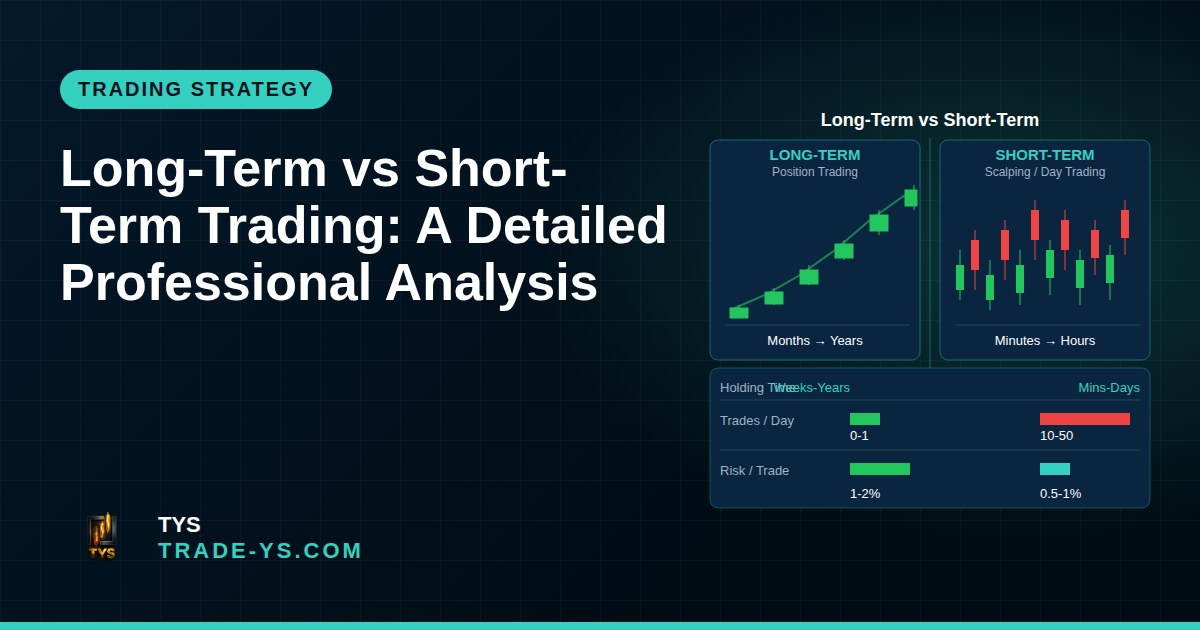
In the trading world, the choice between long-term trading and short-term trading reflects not just a difference in strategy but also in psychology, analysis, and risk management. Long-term traders aim for substantial profits based on fundamental macroeconomic trends, while short-term traders are more reactive, exploiting daily or even minute-by-minute price fluctuations. Both approaches are valid, but understanding their intricacies is key to making informed decisions. This article delves deep into the technical aspects of both approaches.
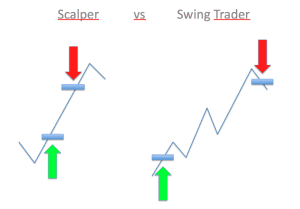
Differences Between Long-Term and Short-Term Trading
-
Time Horizon and Commitment
- Long-Term Trading: Positions are held for months or even years. Position traders aim to capture significant macroeconomic trends over extended periods. These traders rely on long-term fundamental analysis, assessing economic indicators such as GDP growth, interest rates, and corporate earnings projections.
- Short-Term Trading: Positions last minutes, hours, or days. Scalpers and day traders target small price movements within short timeframes. They use technical analysis to focus on short-term patterns like support/resistance levels, moving averages, and momentum indicators.

-
Analysis Methods
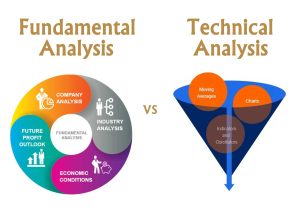
- Long-Term: Fundamental analysis dominates, with traders examining long-term economic drivers, including central bank policies, inflation rates, and geopolitical risks. Earnings reports, balance sheets, and macroeconomic indicators are pivotal in decision-making.
- Short-Term: Technical analysis takes center stage. Traders study price charts and rely on tools such as the Relative Strength Index (RSI), Moving Average Convergence Divergence (MACD), and Bollinger Bands to predict short-term movements. Chart patterns like head and shoulders, double tops, and descending triangles are commonly utilized.
-
Volatility and Risk Management
- Long-Term: Traders withstand greater volatility as they aim for long-term market trends. Their stop-loss orders are usually placed further away from the entry point to allow for short-term fluctuations. Dollar-cost averaging and portfolio rebalancing are common risk management strategies.
- Short-Term: Traders use tight stop-losses and adapt quickly to market movements. Leverage is often employed to maximize small price movements, but this requires careful risk control, often using tools like average true range (ATR) to adjust position sizes based on intraday volatility.

-
Psychology and Discipline
- Long-Term: Patience and mental fortitude are essential. Traders need to remain calm during market corrections and focus on their long-term outlook, resisting emotional reactions to short-term market noise.
- Short-Term: Discipline is key. Short-term traders must quickly execute trades and control emotions, ensuring that fear and greed do not dictate decisions. Adherence to a strict trading plan and managing psychological stress are vital to success.

Case Study: When to Use Each Approach
Trader X – Long-Term Strategy
Trader X focuses on equity indices and follows a trend-following strategy on the S&P 500 futures. By analyzing long-term economic indicators, they identify an extended upward trend in the market. Despite minor pullbacks, Trader X maintains their positions, using trailing stops to protect profits while letting the trade run over several months. This approach is suited for traders looking to capture large market moves driven by macroeconomic cycles.
Trader Y – Short-Term Strategy
Trader Y, on the other hand, trades the EUR/USD currency pair using a scalping strategy. They capitalize on short bursts of momentum during the European trading session, utilizing 1-minute and 5-minute charts. Trader Y uses momentum indicators like the Stochastic Oscillator and follows price action closely, entering and exiting trades multiple times a day to accumulate small gains.
Examples of Long-Term and Short-Term Strategies
Long-Term Trading Strategies
- Value Investing
Traders buy undervalued assets and hold them over the long term, expecting market corrections to reveal their true worth. They focus on stocks with strong fundamentals, using price-to-earnings ratios and dividend yields to identify long-term opportunities. - Momentum Investing
Traders invest in assets experiencing long-term upward momentum, such as stocks in emerging sectors. The idea is to buy into strong trends and hold as long as the momentum remains intact, confirmed by indicators like the 200-day moving average and the MACD.
Short-Term Trading Strategies
- Scalping in Forex
Scalpers execute dozens or even hundreds of trades per day, capturing small price movements. Using tick charts and short time frames, they rely on order flow analysis, exploiting liquidity pockets and minor fluctuations in currency pairs like the USD/JPY. - Intraday Breakout Trading
In this strategy, traders monitor key price levels, such as pivot points or Fibonacci retracement levels, and enter trades when price breaks through those levels with high volume. This approach is ideal for volatile assets like cryptocurrencies or CFDs on crude oil.
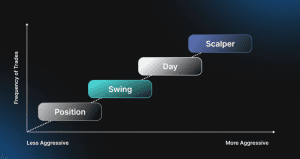
Advantages and Disadvantages of Both Approaches :
Long-Term Trading: Advantages
- Lower transaction costs due to fewer trades.
- Potential for substantial gains as market cycles unfold.
- Requires less daily monitoring, making it ideal for traders with other commitments.
Long-Term Trading: Disadvantages
- Vulnerable to long periods of market stagnation.
- Profits may take years to materialize.
- Requires the mental fortitude to withstand market corrections without panic-selling.
Short-Term Trading: Advantages
- Quick profits can be made from daily market movements.
- High engagement allows traders to react immediately to market news and data releases.
- Allows flexibility and the ability to capitalize on both rising and falling markets.
Short-Term Trading: Disadvantages
- High transaction costs due to frequent trading.
- Demands constant focus and discipline, leading to potential burnout.
- Requires strict risk management due to high volatility and leverage use.
Conclusion
Whether opting for long-term or short-term trading, the choice ultimately depends on the trader’s goals, time horizon, and risk tolerance. Long-term traders focus on macroeconomic fundamentals and large market trends, while short-term traders rely on technical analysis and volatility to exploit rapid price changes. Mastering either approach requires discipline, sound risk management, and a thorough understanding of market dynamics.